
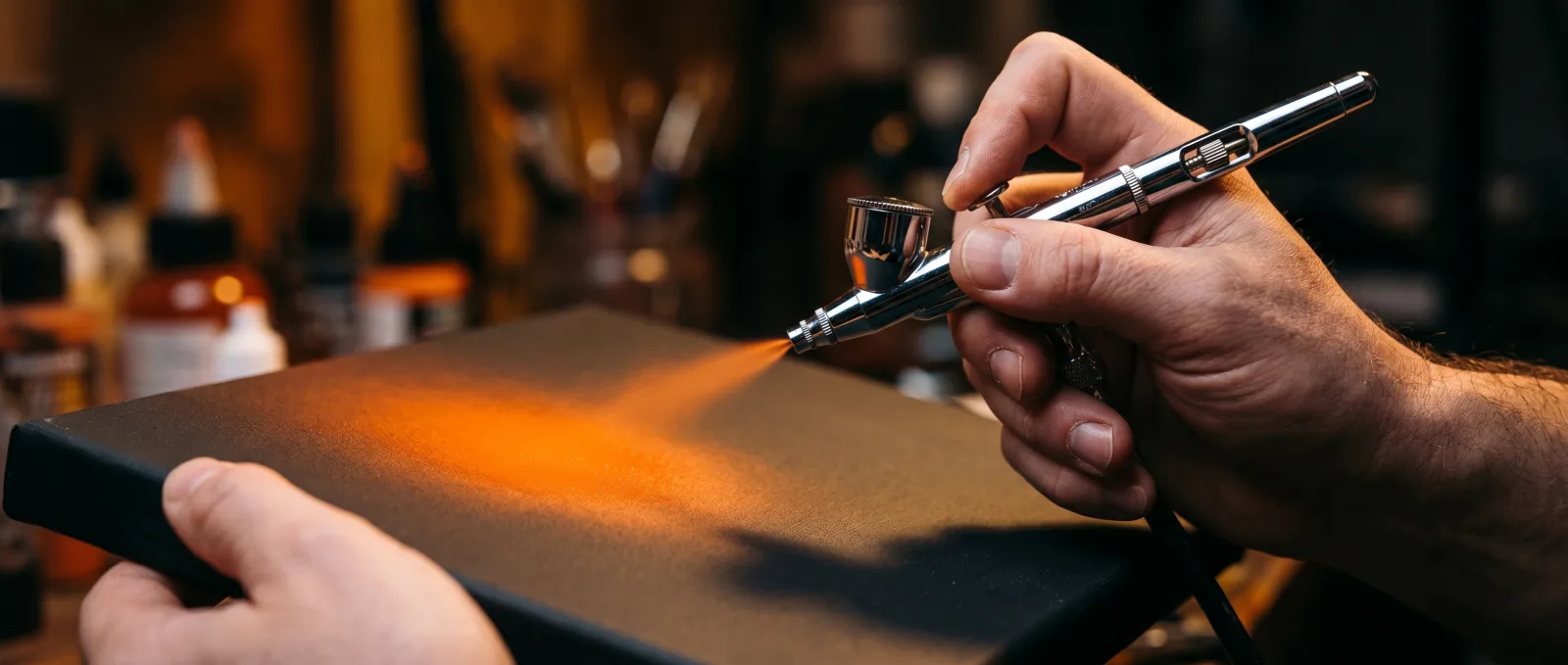
Color modulation is a painting technique, popular in scale modeling, where you deliberately paint an object with a range of lighter and darker tones of the base color rather than a single flat hue. The result mimics how light falls realistically on a three-dimensional surface.
On a tank model, for example, a modulated finish might have bright highlights on top surfaces where sun would hit, mid-tones on the sides, and darker shadows in recesses. This creates depth and visual interest that a uniform coat of base color can’t achieve.
Basic modulation process:
- Apply a mid-tone base coat.
- Mix the base color with white (or a lighter color) and apply to raised surfaces, panel centers, top surfaces.
- Mix the base with black (or a darker color) and apply to recesses, lower surfaces, shadow areas.
- Blend transitions with light, thin passes.
Related: Pre-Shading · Zenithal Priming · Gradient · Trigger Control
Read next: Best Airbrush for Miniatures 2026: 7 Tested Picks