Best Airbrush for Plastic Models & Scale Kits in 2026: Gunpla, Military & Aircraft Compared
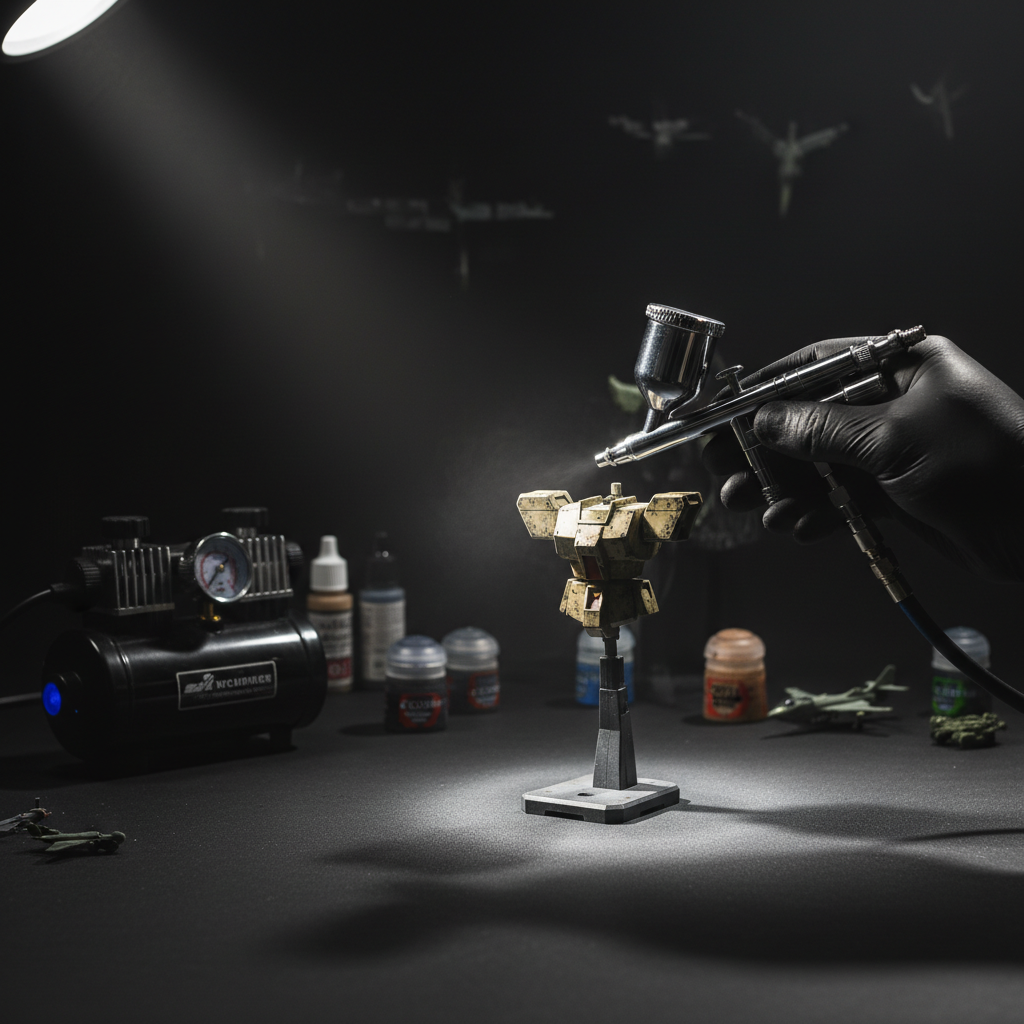
Spending three hours masking a 1/48 Spitfire only to have your airbrush spit, clog, or blow out the panel lines is the kind of frustration that makes people quit the hobby, and it’s almost always a tool mismatch problem, not a skill problem.
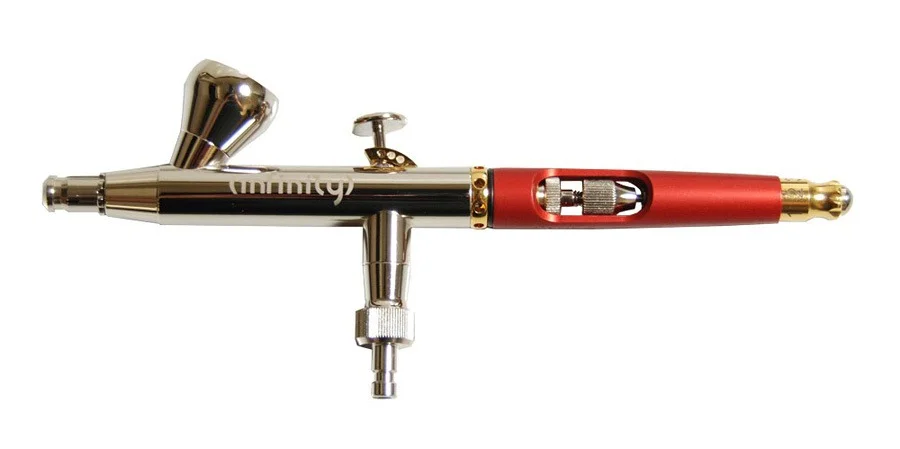
Quick answer: For most scale modellers working across Gunpla, military vehicles, and aircraft, the Iwata Eclipse HP-CS (also at SprayGunner) with a 0.3mm needle hits the best balance of control, paint compatibility, and long-term reliability. If you want to step up, the Harder & Steenbeck Infinity (also at SprayGunner) is the brush I’d buy if I were starting over today. Budget-conscious? The Iwata Neo CN (also at SprayGunner) will get you further than any cheap clone.
If scale kits are only part of what you spray, the best airbrush guide compares the whole range by budget rather than by subject.
Why Scale Modelling Demands More from an Airbrush
I’ve been airbrushing for 15 years across everything from T-shirt art to automotive panels, but scale modelling is honestly where I see the most tool-related frustration among intermediate hobbyists. The problem is that the demands are unusually varied, in a single afternoon on a 1/35 Tiger I, you might need to:
- Lay down a smooth basecoat over large flat panels
- Pull back to 8–10 PSI for subtle chipping effects
- Shoot thin, precise lines along recessed panel details
- Switch to a thicker mix for dunkelgelb modulation
That range of tasks is what separates a scale-modelling airbrush from a general-purpose one. A nail art brush or a t-shirt gun isn’t designed for it. Let’s get into the specifics.
Needle Size: The Most Important Spec Nobody Talks About Enough
Most beginner guides tell you to just “get a 0.3mm.” That’s correct, but here’s the why that most guides skip:
| Needle Size | Best For | Limitations |
|---|---|---|
| 0.2mm | Extreme hairline detail, 1/72 scale figures | Clogs easily with metallics; slow basecoating |
| 0.3mm | All-around scale modelling: Gunpla, aircraft, vehicles | Slightly slow for very large surfaces |
| 0.4mm | Large basecoating, terrain, 1/16 scale armor | Too coarse for tight panel detail |
| 0.5mm+ | Primers, heavy textures | Not practical for fine scale work |
My pick is 0.3mm for 90% of scale work. The Iwata Eclipse HP-CS ships with a 0.35mm needle, which is close enough to feel like a 0.3mm in practice and gives you a touch more flow for basecoating, a genuine advantage on bigger kits.
The Harder & Steenbeck Ultra runs a 0.2mm as standard and is exceptional for extreme detail on 1/72 aircraft cockpits or tiny Gunpla panel line work. Just know that it punishes you immediately if you forget to thin your Mr. Color properly. The H&S Infinity is more forgiving. I run mine at 0.4mm for most work and swap the needle for finer sessions.
PSI Range: Matching Pressure to Your Paint and Kit Scale
Scale modelling paints are finicky, and PSI is where most beginners run into trouble. Here’s the general range I use:
- 8–12 PSI: Hairline details, pre-shading, panel line emphasis
- 12–18 PSI: Standard basecoating with Tamiya or Mr. Color thinned properly
- 18–25 PSI: Vallejo Model Air (also at SprayGunner) (which needs slightly more pressure due to its binder), primers, and Badger Stynylrez Primer (in stock at SprayGunner) specifically
Badger Stynylrez Primer is my go-to primer for all plastic model work, it bonds aggressively to styrene and resin, thins beautifully with water, and shoots clean at 18–20 PSI through a 0.3mm or 0.4mm needle. I’ve primed hundreds of Gundam kits with it and never had adhesion failures.
For your compressor, the Sparmax AC-501X is my midrange recommendation, it has a tank, moisture separator, and a reliable regulator that holds pressure in the 10–25 PSI range without hunting. If budget is tight, the AS-186 Mini Compressor works, but get an Airbrush Moisture Trap added to your order immediately, tankless compressors without moisture control will put water droplets in your camo pattern at the worst moment.
The Iwata Smart Jet Compressor is overkill for most modellers but worth it if you’re airbrushing daily and want whisper-quiet operation in a shared space.
Paint Compatibility: Tamiya, Mr. Color, and Vallejo Side-by-Side
This is the question I get asked most often in the scale modelling community, so I’m going to be specific.
Tamiya Acrylics
Thin with Tamiya X-20A or isopropyl alcohol at 1:1. They shoot beautifully through a 0.3mm at 12–15 PSI once thinned. Dries fast, which is great for masking but unforgiving if you stop mid-session, flush your needle immediately.
Mr. Color (Lacquer)
Work in ventilated space, these are lacquers, full stop. Thin with Mr. Color Leveling Thinner at roughly 1:1.5. They produce the smoothest finish of any paint I’ve used on aircraft kits. Shoot at 12–18 PSI through a 0.3mm. The Harder & Steenbeck Infinity handles lacquers particularly well due to its Teflon-free seal design.
Vallejo Model Air
These are my recommendation for anyone who wants water-based paints that actually work out of an airbrush without heavy thinning. The Vallejo Model Air Paint Set is ready-to-spray in most cases, just add a drop or two of water or Vallejo’s flow improver. Run them at 15–20 PSI; they need slightly more pressure than lacquers. The Iwata Eclipse HP-CS handles Vallejo without drama. The Badger Renegade Krome is also excellent with Vallejo, its needle geometry produces a fine, consistent fan pattern that’s great for two-tone European armor schemes.
Createx Colors
Technically made for textiles but popular in the modelling community for weathering washes and certain base effects. Thin with their own reducer. They’re thicker and benefit from a 0.4mm needle. Not my first choice for scale modelling specifically, but useful to have in the toolkit.
The Airbrush Lineup: My Honest Take
Premium tier:
- Harder & Steenbeck Infinity. Best all-around for serious scale modellers. The split-needle system makes cleaning faster, which matters when you’re swapping between Mr. Color lacquer and Tamiya acrylic in the same session. The main downside: the price. It’s a genuine investment.
- Harder & Steenbeck Ultra. Better for ultra-fine detail, worse for quick basecoating. I’d only recommend it as a second airbrush for detail work, not as a sole tool.
Midrange tier:
- Iwata Eclipse HP-CS. My primary recommendation for intermediate modellers. It’s reliable, widely serviced, shoots every paint I’ve ever thrown at it, and the cup size is generous enough for basecoating an entire 1/35 hull without refilling. The downside is that it’s not the easiest to fully disassemble for deep cleaning.
- Badger Renegade Krome. Excellent atomization, great customer service from Badger if anything goes wrong. I find it slightly finicky with thick metallics but outstanding for Vallejo and Tamiya.
- Paasche Talon. Solid, often underrated. The self-centering needle design reduces tip dry. My only criticism is that the trigger feel isn’t as refined as the Iwata or H&S, which matters for modulation work where you’re riding the trigger constantly.
Budget tier:
- Iwata Neo CN. If you’re intermediate and budget-constrained, buy this over any clone. It’s a real Iwata, manufactured to real tolerances. My experience is that students who start on the Neo CN develop better trigger control because it’s honest about mistakes.
- Master Airbrush G22. I’ve tested these and they work, but the tolerances are loose enough that you’ll spend time chasing leaks and needle fit issues. Fine as a disposable tool for rough priming work; not fine as your primary brush.
Cleaning: The Part Most Guides Underserve
Scale modelling means paint switching constantly, and lacquers especially will destroy your airbrush if you’re lazy about flushing. My standard routine:
- Backflush with the appropriate solvent three times
- Run Medea Airbrush Cleaner through until it runs clear
- Drop needle, wipe tip with lint-free cloth
- Weekly: full disassembly using an Airbrush Cleaning Kit (the needle, nozzle, and crown cap need individual attention)
Medea Airbrush Cleaner is safe on all seals and works on both lacquer and acrylic residue. I keep a squeeze bottle of it next to my compressor at all times.
What’s Next
If you’re building out your full airbrushing setup beyond just the brush itself, these will help:
- Essential Airbrush Accessories & Tools: The Complete Checklist (2026). Everything that should be on your bench alongside the airbrush, from moisture traps to holders to cleaning stations.
- Choosing The Right Air Compressor. A deeper breakdown of compressor specs, tank sizes, and duty cycles if you’re still deciding between the Sparmax and the Iwata Smart Jet.
- Advanced Guide to Airbrush Paint. Goes further into paint chemistry, thinning ratios, and why the same color can behave completely differently across brands, essential reading before you start mixing your own colors.
Frequently Asked Questions