
The Airbrush
Technique
Bible
From First Spray to Professional Results

Why This Book Exists
The difference between a hobbyist and a confident professional is not memorized techniques — it's deep principles. Once you understand why things work, you can figure out any technique yourself.
- Tutorials teach tricks — this book teaches thinking
- How paint, air, distance and surface interact
- How to use this book to get the most from it
- What you need before starting (any brand will do)
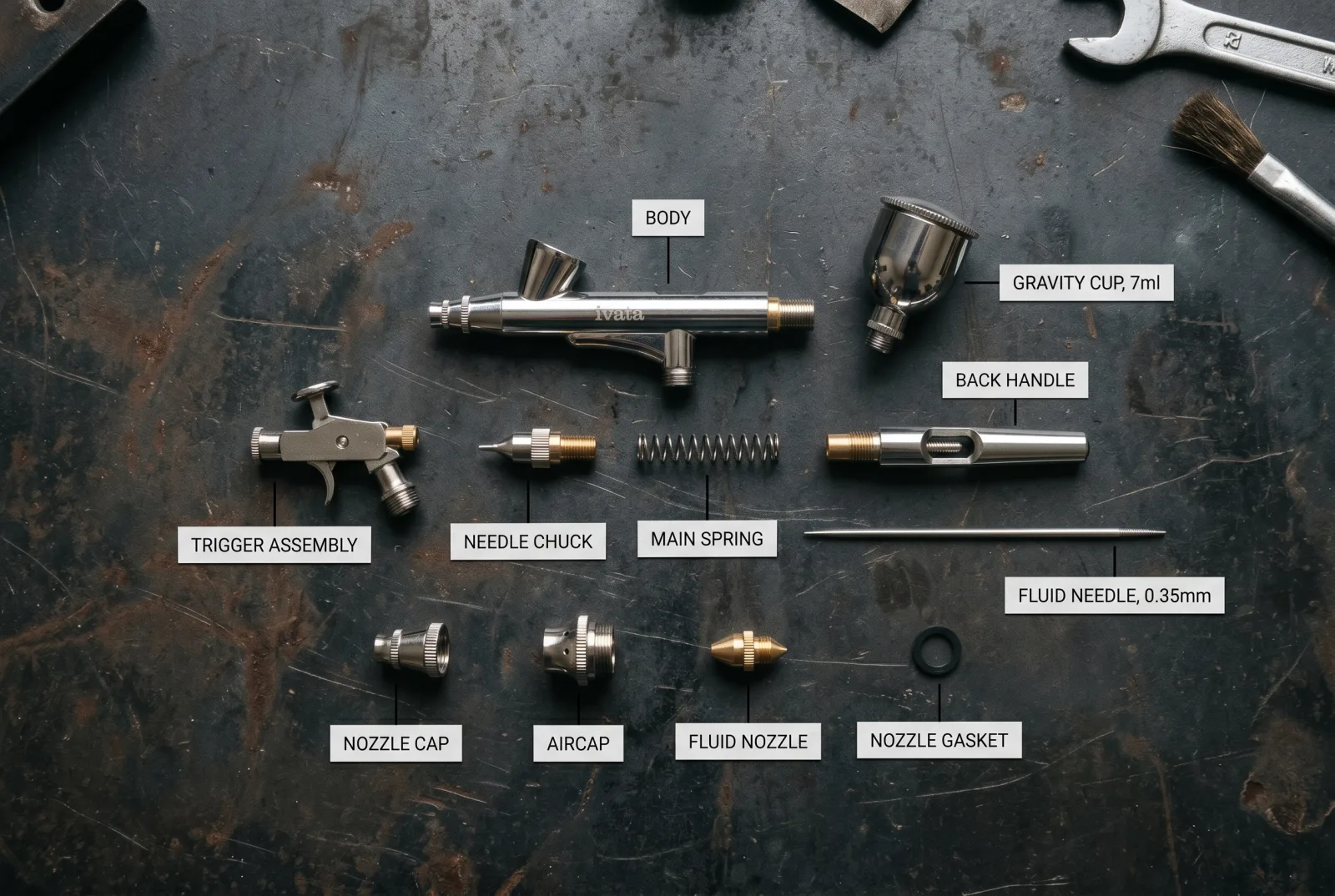
Understanding Your Airbrush
Before you can use an airbrush well, you need to understand what it actually is. Artists who develop fastest can feel what's happening inside the airbrush while they work.
- The atomisation principle — how an airbrush actually works
- Single-action vs dual-action: what matters and why
- Gravity feed vs siphon feed
- Needle sizes — 0.2 / 0.3 / 0.5mm and when to use each
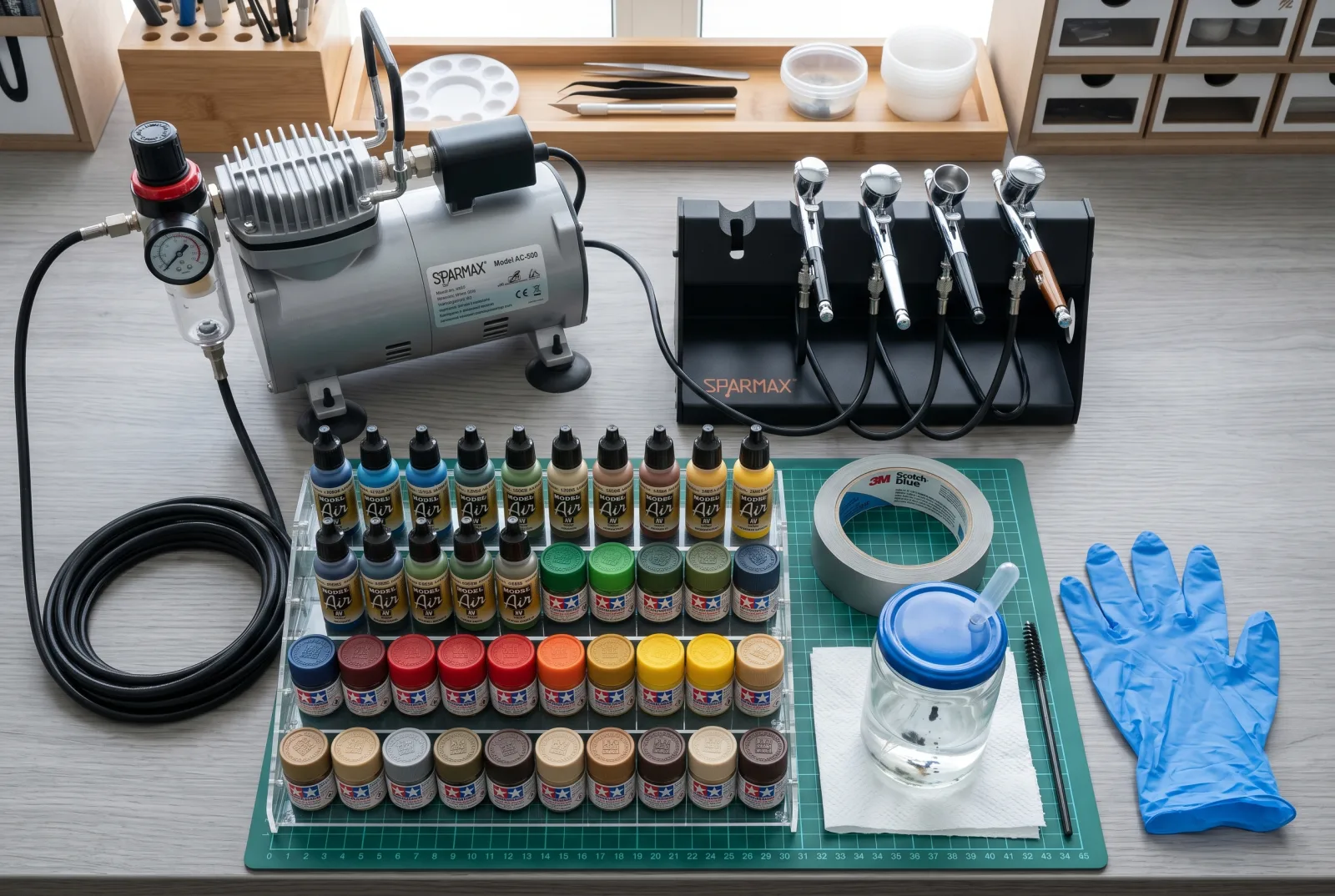
Setting Up Your Workspace
A badly set up workspace costs you hours every session. A well-designed one disappears — letting you focus entirely on the work in front of you.
- Choosing and sizing your compressor correctly
- Ventilation, respiration and safe working habits
- Organising paints, tools and cleaning supplies
- Ergonomics: lighting, seating, paint placement
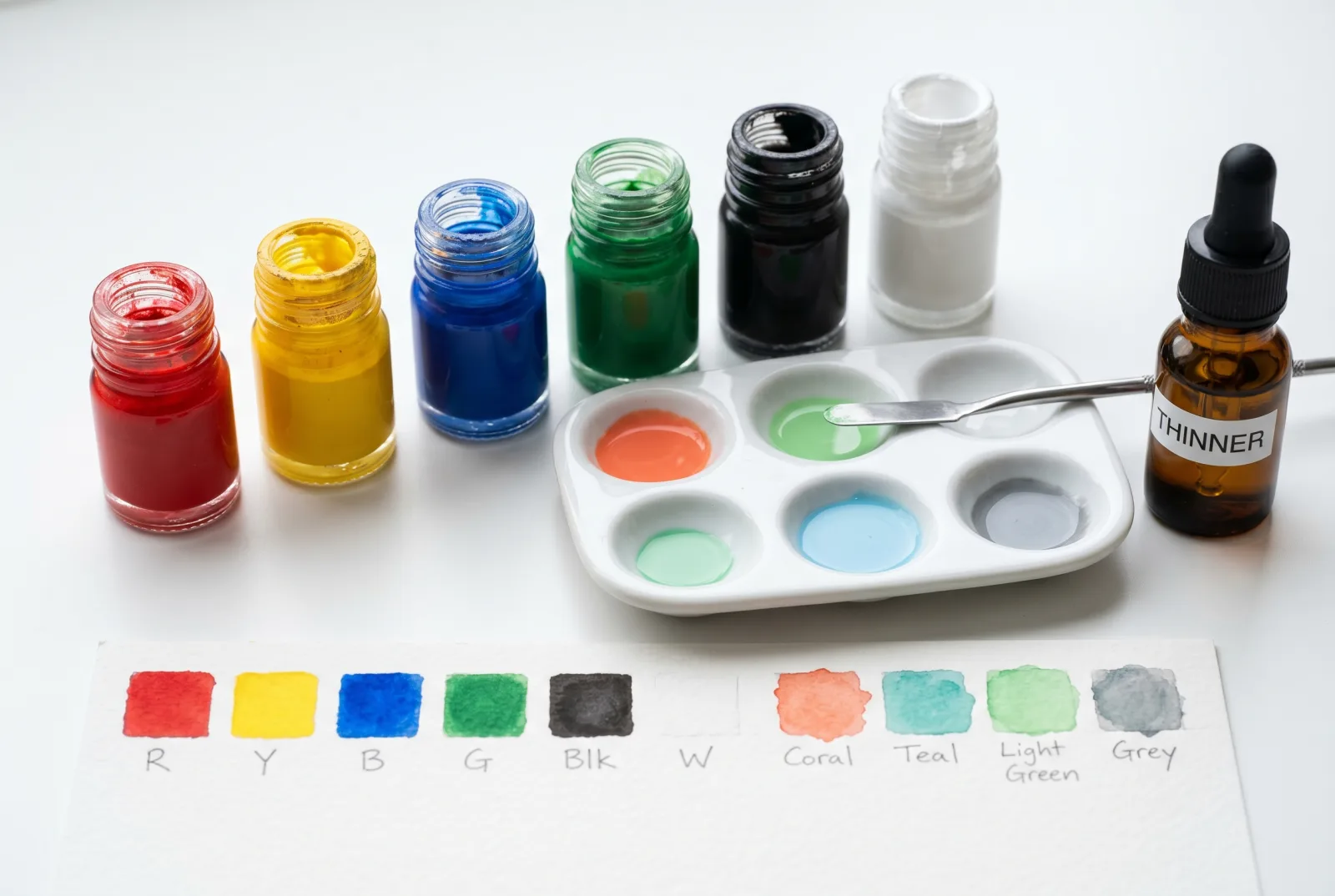
Paint Science
Paint behaviour is the most common source of frustration for beginners. Understanding what's happening chemically gives you total control over the material.
- Viscosity and thinning ratios for different nozzle sizes
- Airbrush-ready paints vs adapting standard acrylics
- Working windows, open time, and dry time
- Mixing, colour matching, and storing mixed paint
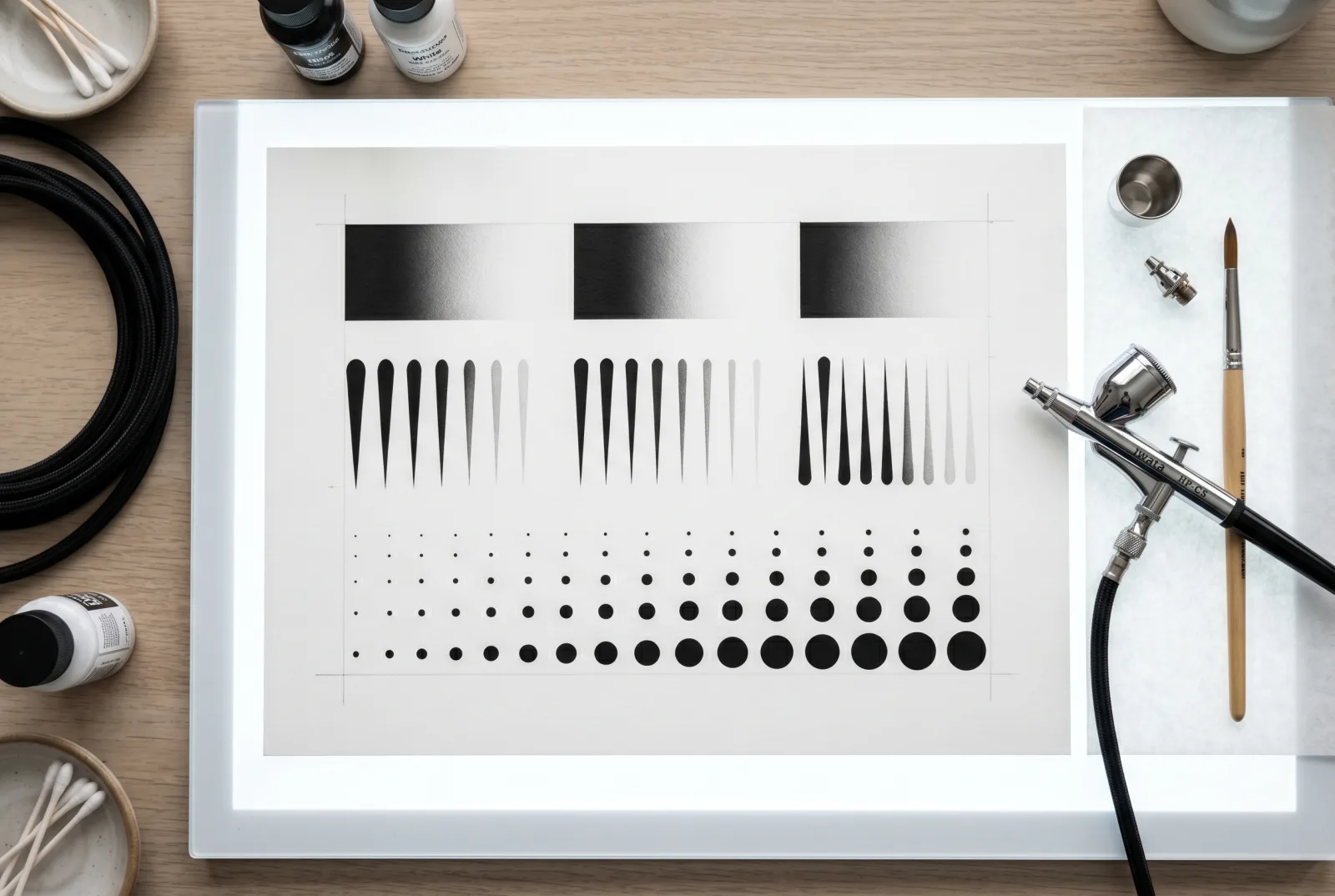
Your First Strokes
The four exercises in this chapter will tell you more about your technique than a month of random painting. Do them in order, on white paper, before moving to anything else.
- The trigger control drill — air first, then paint
- Gradients from nothing: the foundational exercise
- Dagger strokes for fine lines and hair
- Dots: the most revealing test of your control
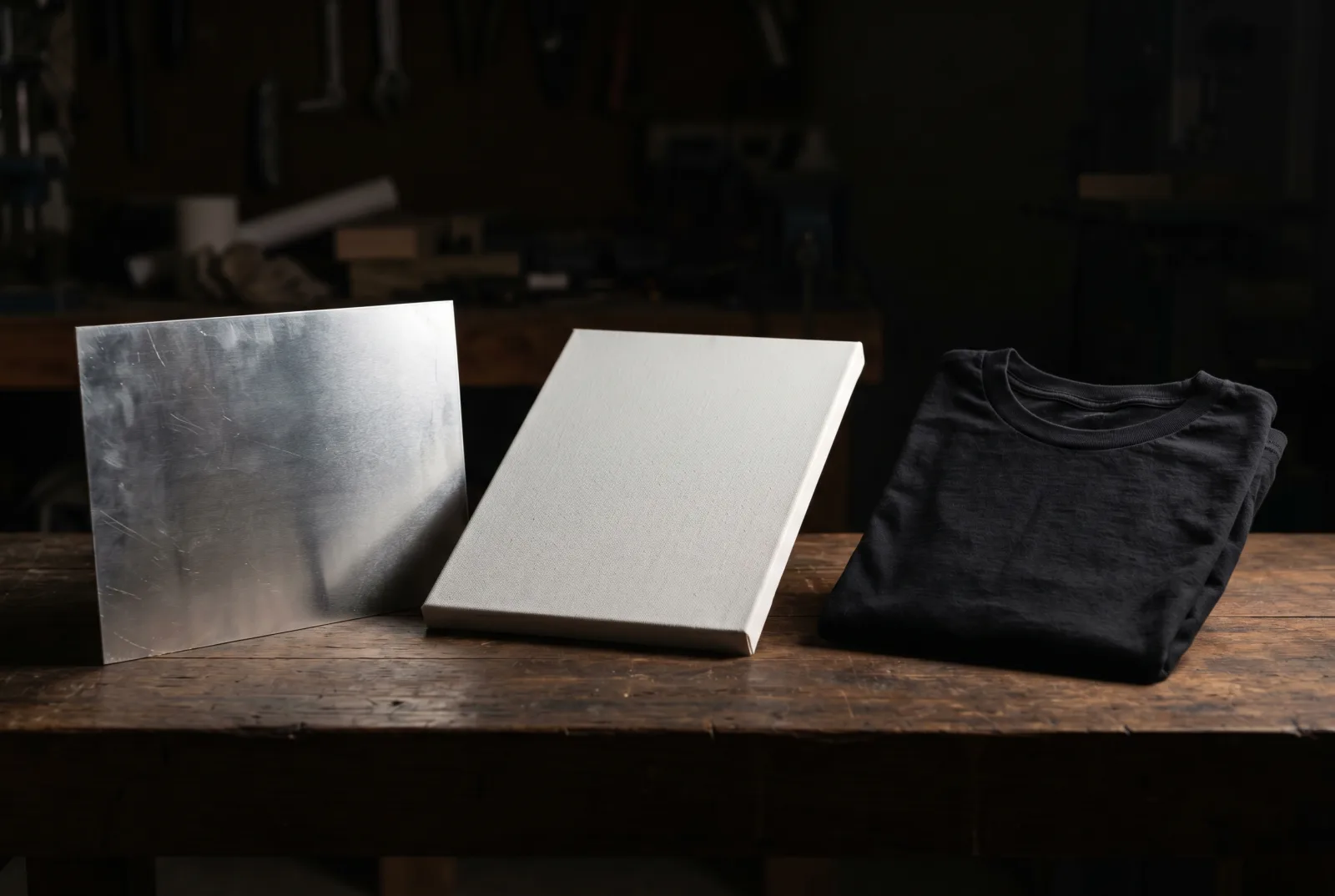
Surface Preparation
Paint doesn't fail in the middle of a project. It fails because of what you did — or didn't do — before you picked up the airbrush. Surface prep is where the job is won or lost.
- Metal, canvas, fabric and plastic — each needs something different
- Primers, bonding agents and surface sealers
- The texture vs smooth decision and when it matters
- Common prep mistakes that cause adhesion failure later
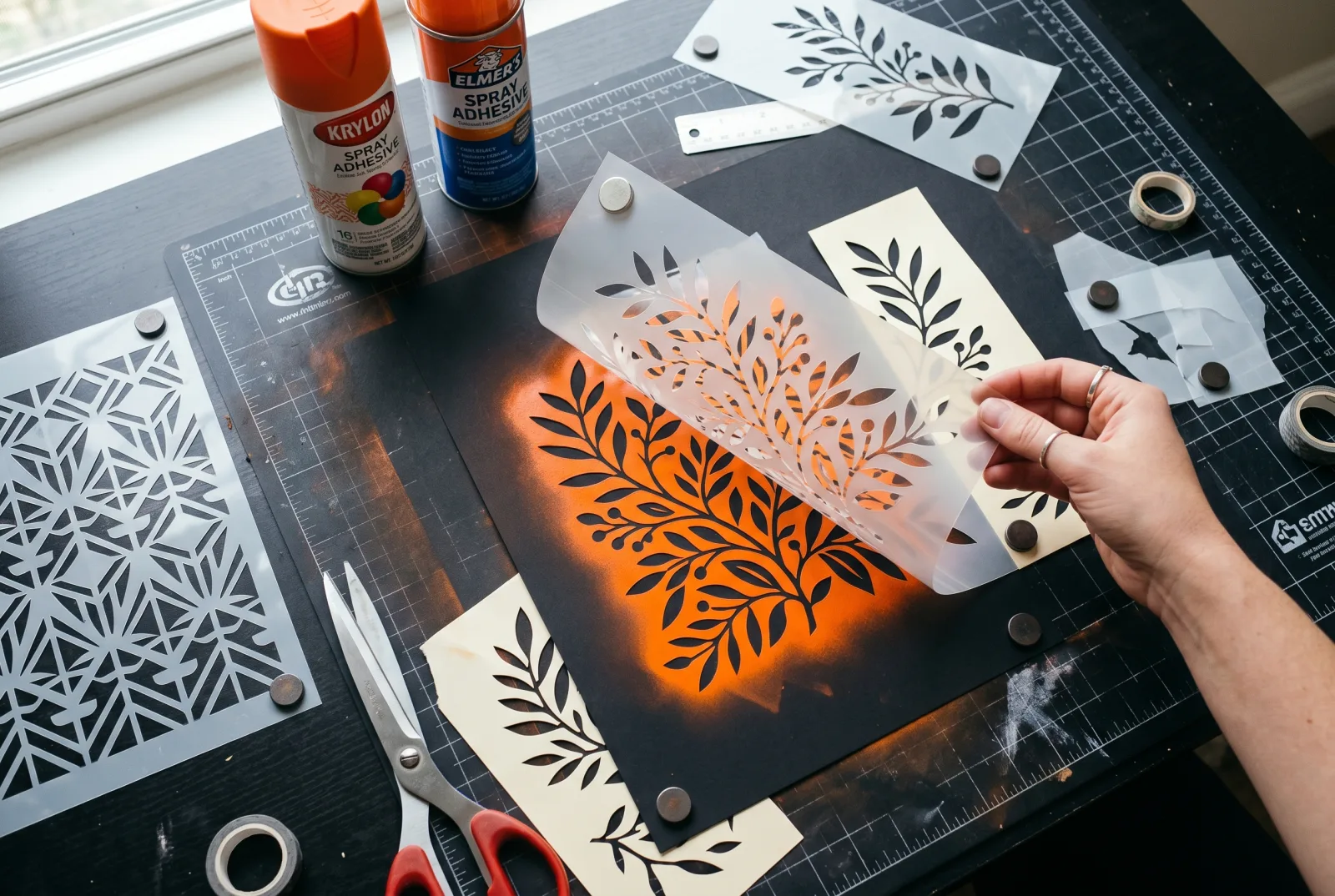
Masking and Stenciling
Masking is not a shortcut — it's a tool that enables work that would be impossible freehand. Knowing when to mask and when not to is a craft in itself.
- Frisket film, liquid frisket and low-tack tape
- Mylar and acetate stencils — cutting and registration
- Hard vs soft edges: when to mask and when to freehand
- Repeat patterns and multi-layer registration
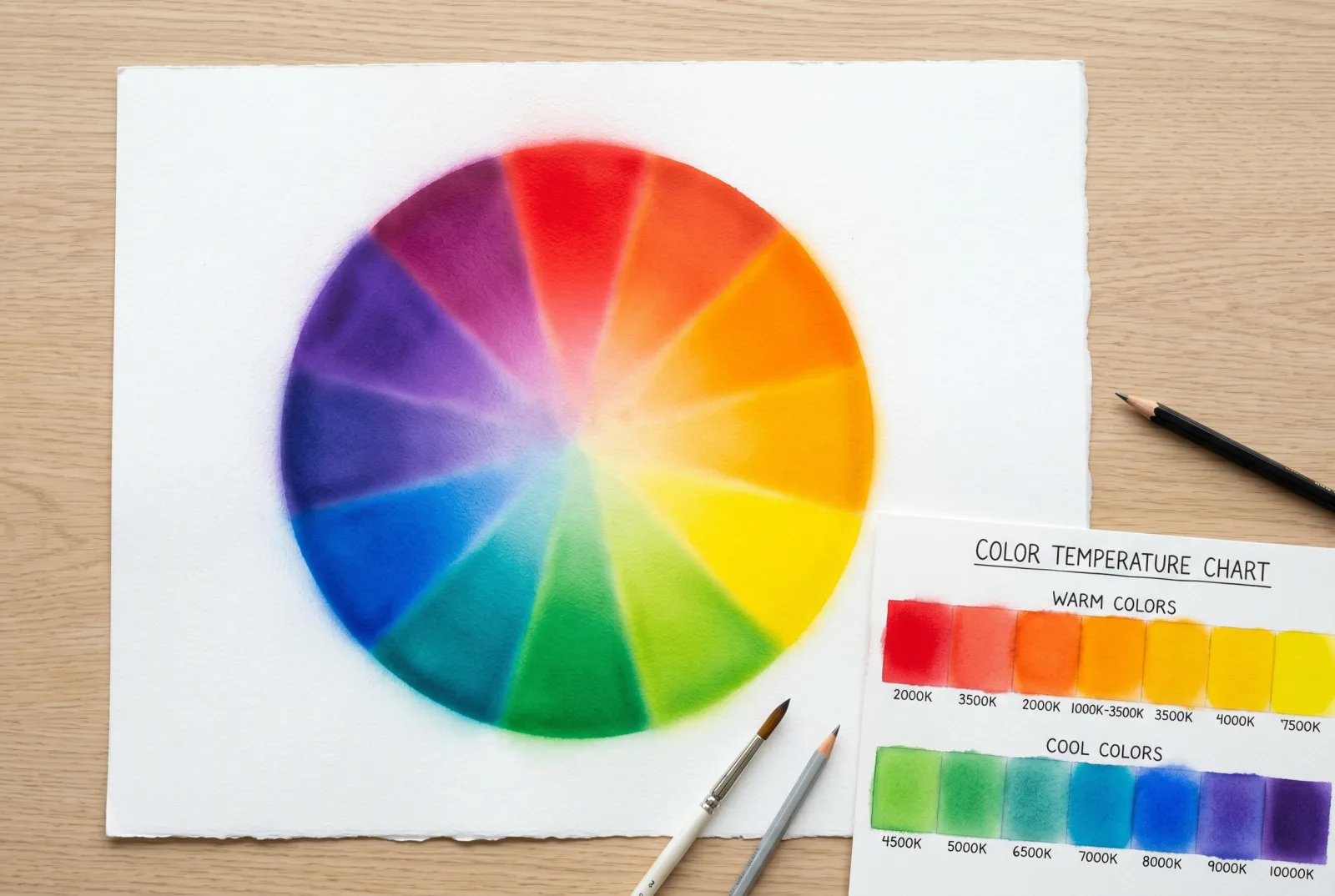
Colour Theory
Most colour problems are value problems. Understanding the three dimensions of colour — and which one to address first — eliminates the muddy results that frustrate almost every beginner.
- Hue, value and saturation as they apply to airbrushing
- Working with transparent layers — colour shifts and glazing
- Warm and cool shadow colours
- Colour matching from reference and from memory
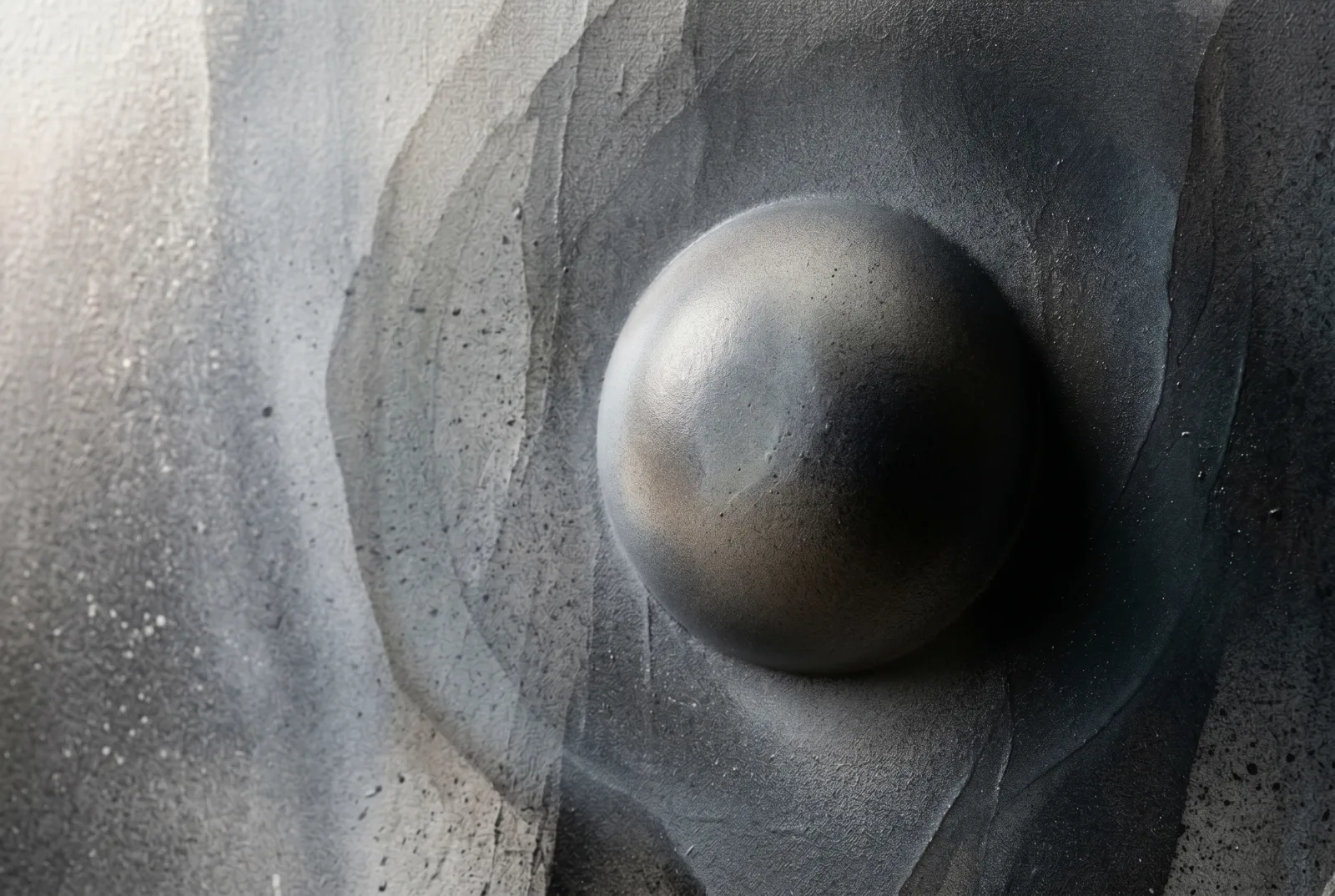
Building Depth
Flat painting comes from thinking about colour. Deep, three-dimensional painting comes from thinking about light. This chapter reorients your whole approach.
- The shadow-first, light-last layering approach
- Transparent paint and how to stack colour without mud
- Occlusion shadows — the most overlooked depth tool
- Reflected light and why it makes the difference

True Fire
Fire is one of the most requested airbrush subjects and one of the most misunderstood. The technique is counterintuitive — this chapter teaches the correct sequence from scratch.
- Reference and anatomy of a convincing flame
- The underpainting method — building fire from dark to light
- Yellow, orange and the red leading edge
- Micro-details: embers, smoke tendrils and heat haze
Portraits
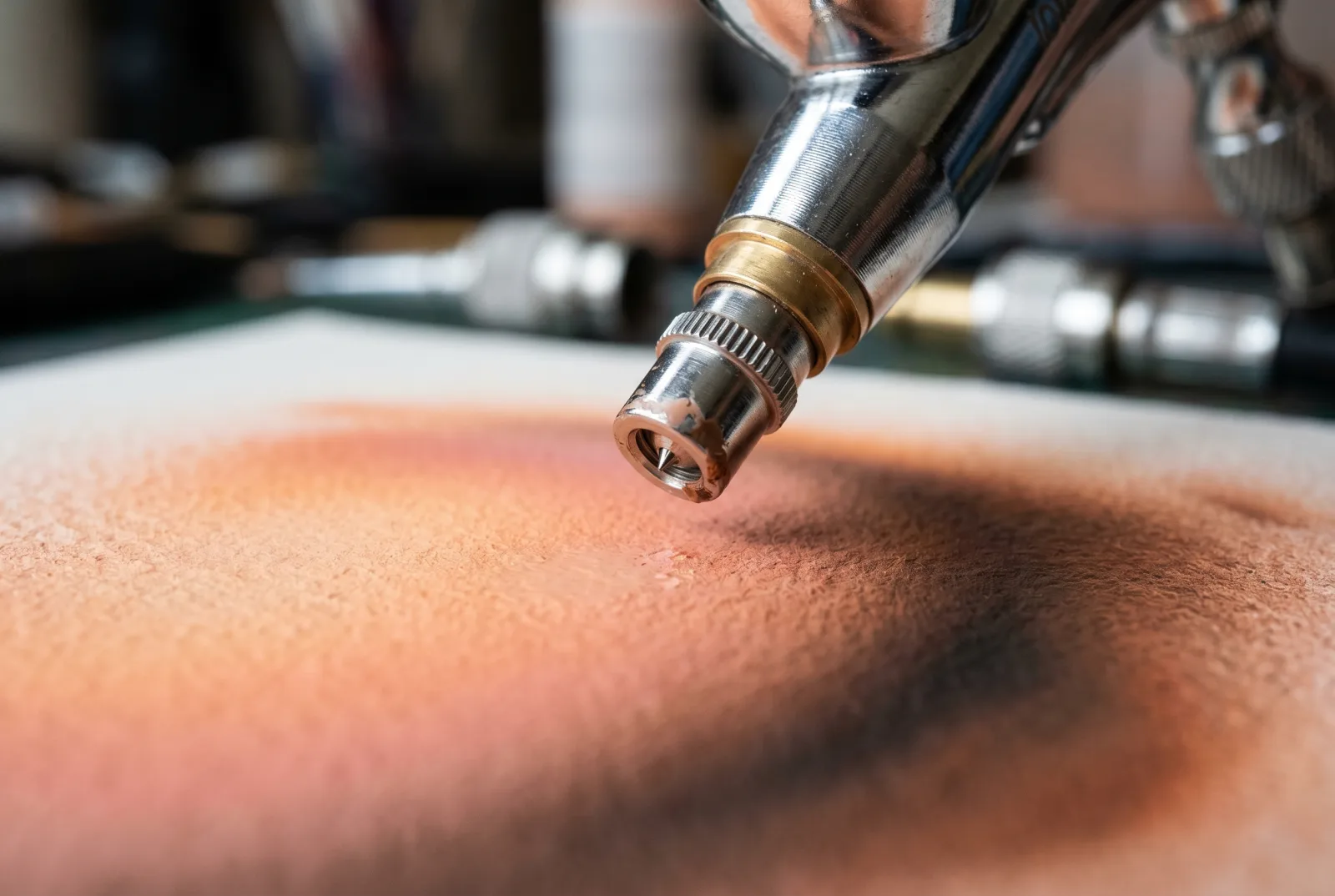
Portrait work requires understanding the human face as a three-dimensional object under a light source, not as a collection of features. This chapter teaches that shift in perception.
- Skin tone mixing, layering and the right thinning ratios
- Eye structure — the most important 10 minutes of any portrait
- Shadow mapping from a reference photograph
- Hair texture: the wet-on-wet and dry-layer techniques
Lettering
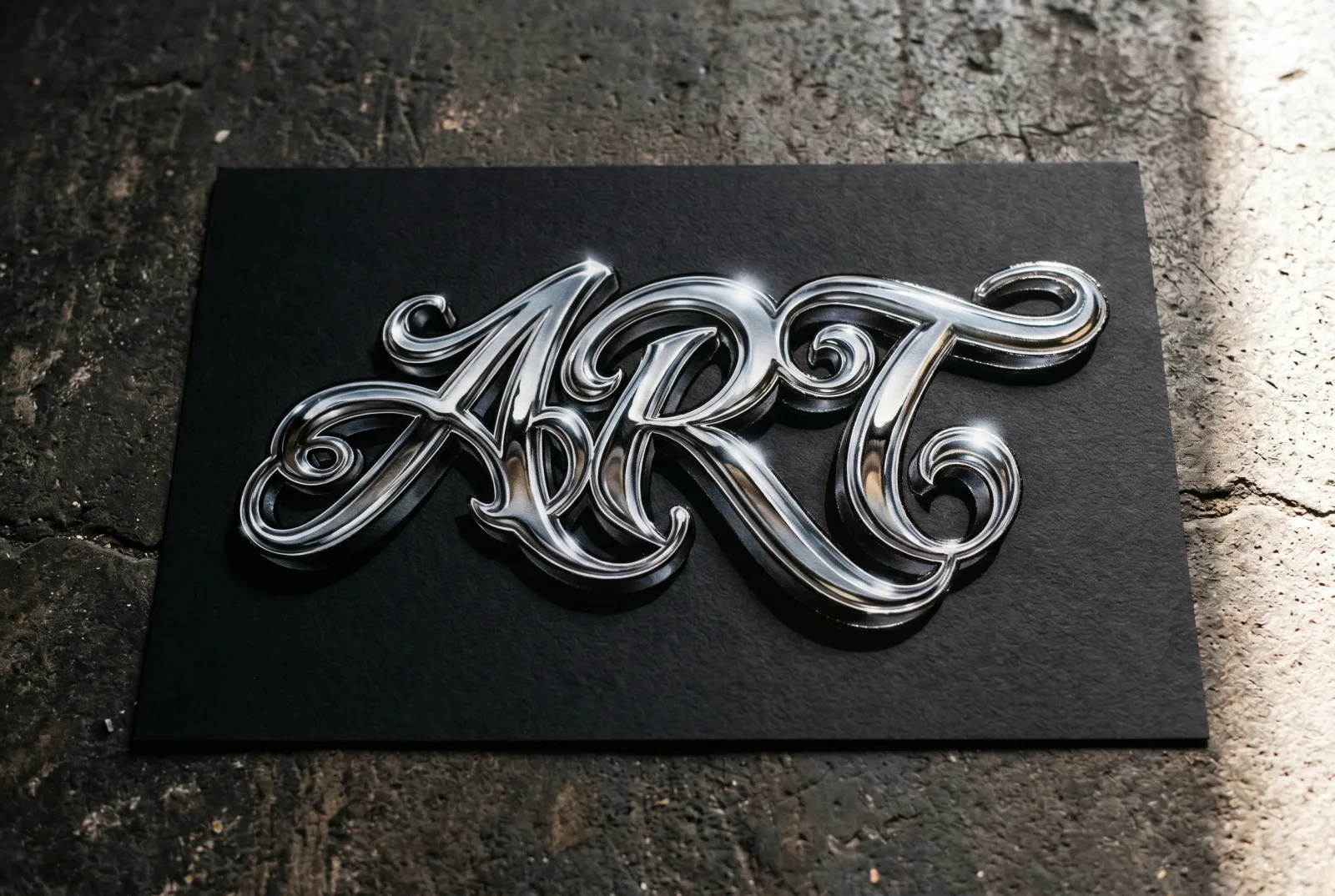
Airbrushed lettering combines fine line control with colour work and perspective. Mastered in the right sequence, it's one of the fastest ways to add value to any commission.
- Block, script and chrome letterform construction
- The outline-and-fill sequence for clean edges
- Gradients inside letterforms
- Drop shadows, glows and inner highlights
Camouflage
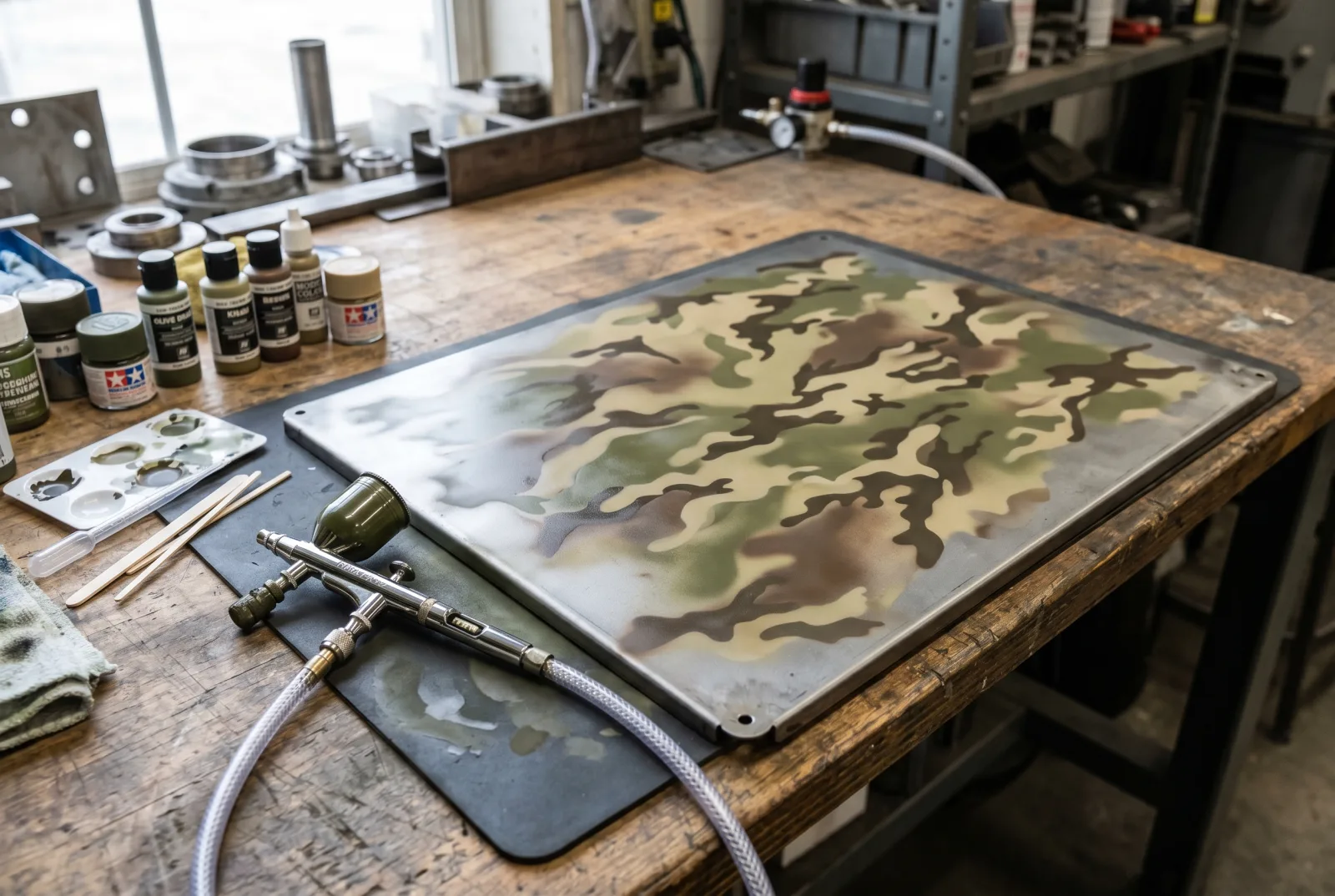
Camouflage is simultaneously one of the most forgiving and most systematic techniques in airbrushing. Done right, it's impossible to distinguish from the real thing.
- Military woodland, desert and urban camo patterns
- Soft-edge organic shape technique without masking
- Multi-layer colour builds for depth
- Applying camo to curved and three-dimensional surfaces
Skulls
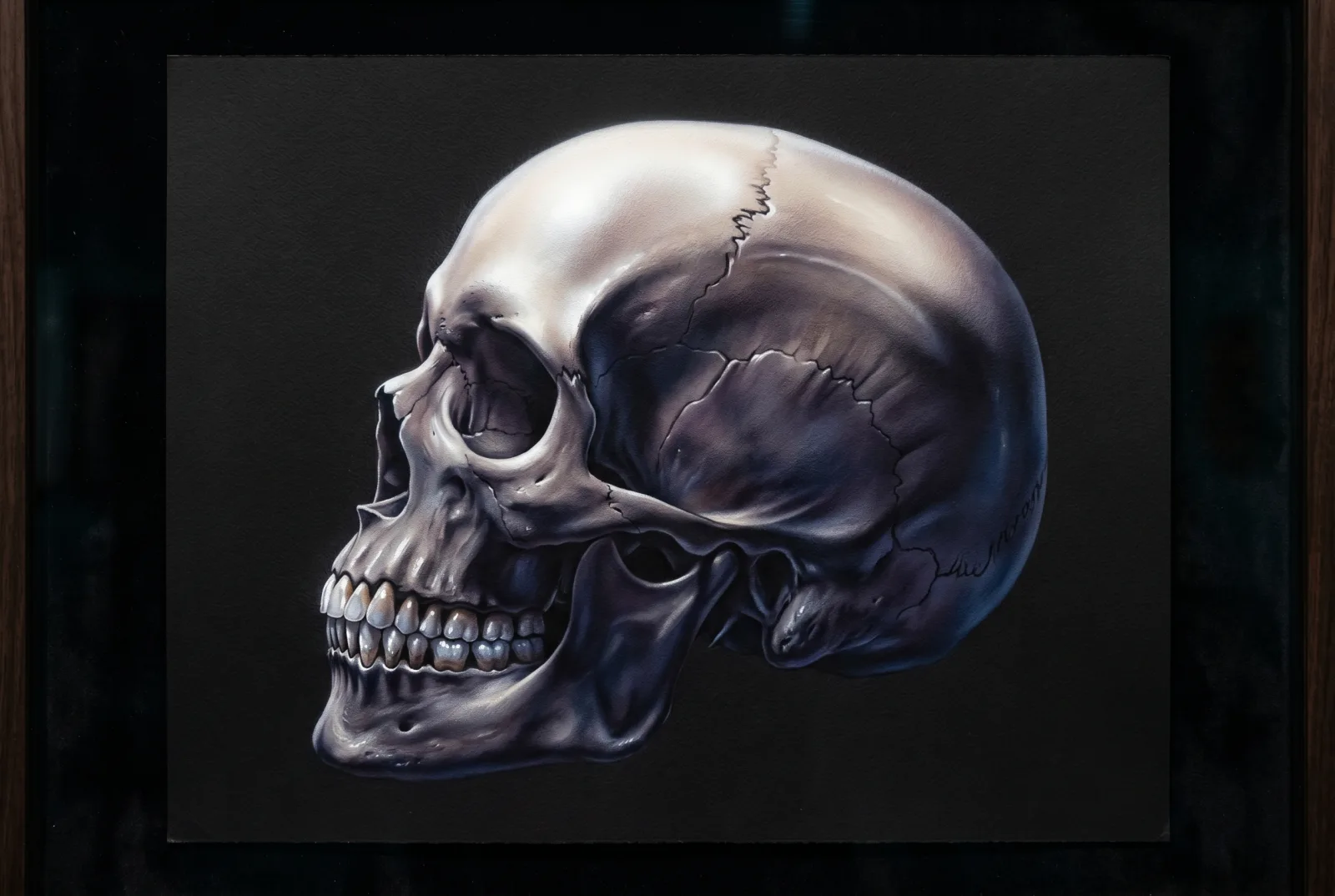
The skull is one of the canonical subjects of airbrush art — and one of the best teachers of form, light and shadow. This chapter walks every stage from blank surface to final highlights.
- Skull anatomy for the airbrush artist
- The dark-to-light build sequence on black
- Adding drama with colour temperature shifts
- From pencil sketch to finished painted piece

Chrome & Metal
Chrome is pure observation and pure value control. There is no colour mixing trick — only the correct placement of extreme darks against extreme lights. This chapter teaches that precision.
- The value scale for chrome — from pure black to pure white
- Reflected horizon lines and their placement
- Colour temperature in metallic surfaces
- Brushed steel, polished chrome and tinted mirror finishes
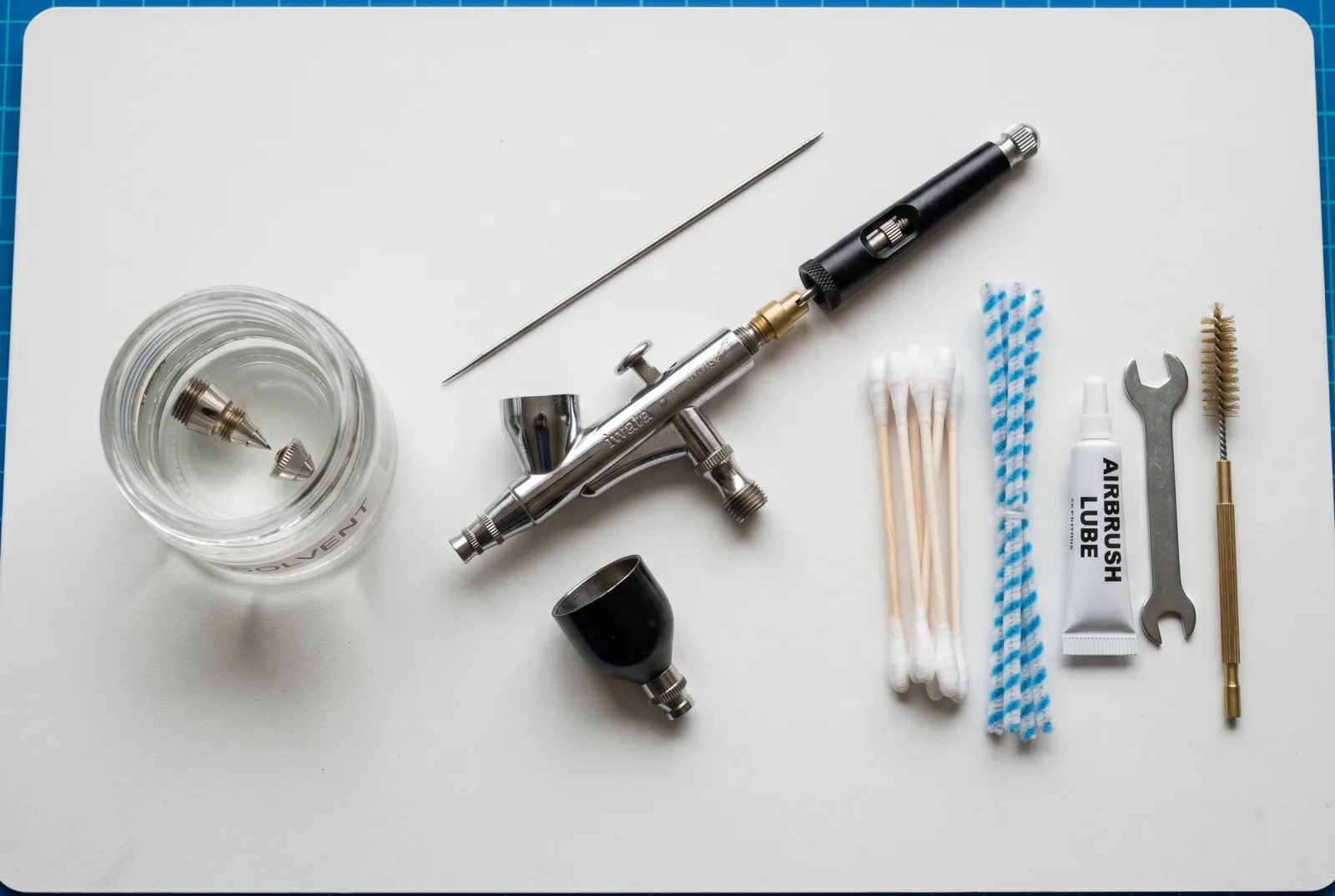
Troubleshooting Encyclopedia
Every problem has a cause. This encyclopedia organises every common failure by symptom, with specific fixes for each. Bookmark this chapter — you will return to it throughout your career.
- Spitting, splattering and uneven spray patterns
- Paint not adhering — surface, primer and viscosity causes
- Tip dry, needle drag and partial clogs
- Pressure problems: compressor, hose and regulator diagnosis

Pricing Your Work
Most artists underprice for years because they're guessing. This chapter gives you a framework, not just a formula — so you can price confidently for any project.
- Cost-based vs value-based pricing — and when to use each
- How to position yourself in your local market
- Quoting a custom job: the conversation and the numbers
- Pricing templates for common commission types
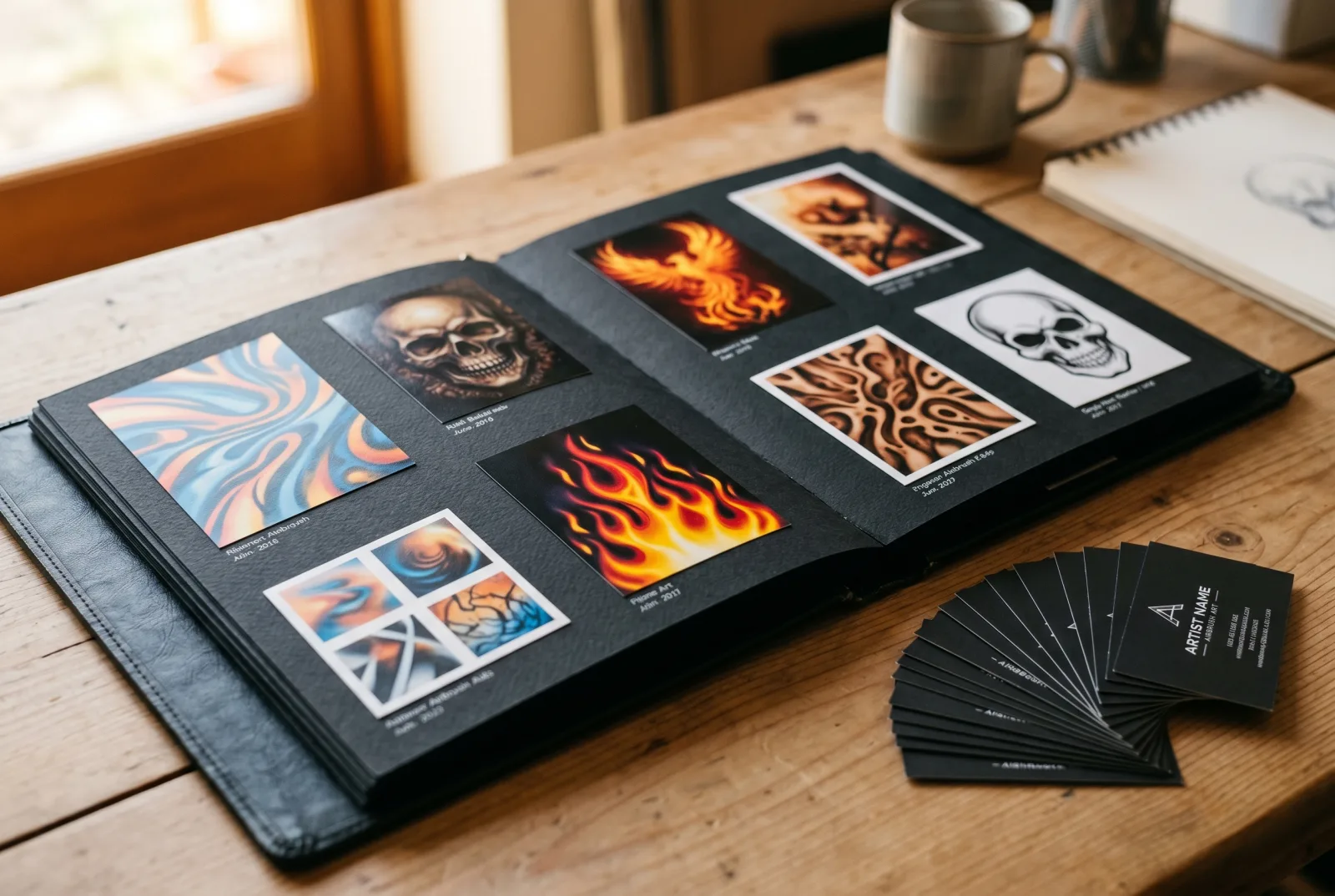
Finding Clients
The artists who build sustainable practices are not necessarily the most talented — they're the ones who understand how to make their work findable and their clients loyal.
- Building an online portfolio that works while you sleep
- Local referral networks and how to activate them
- Trade shows, custom shops and commission platforms
- Keeping clients: repeat work and word-of-mouth growth
Start understanding.
17 chapters. Every technique. Step-by-step projects.
The troubleshooting guide you'll use for years.