
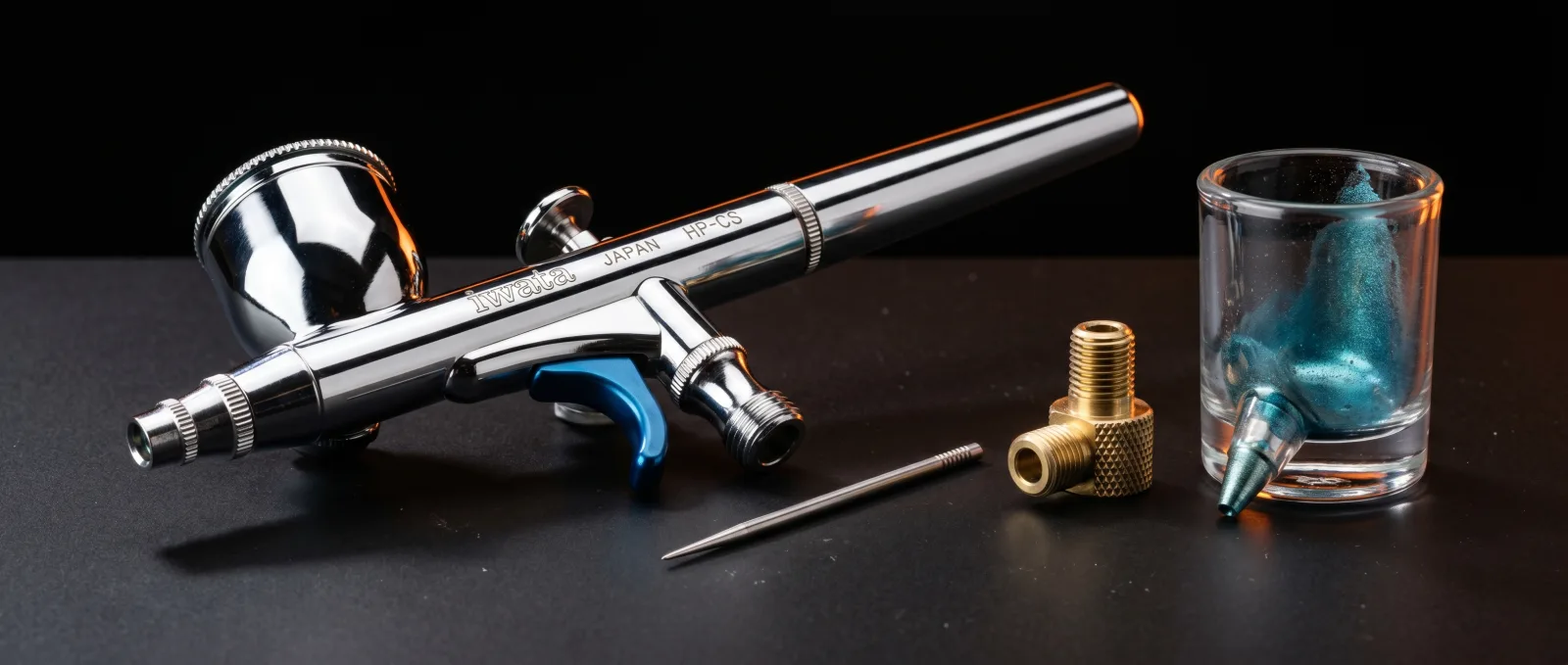
What it means: One trigger controls only air; paint flow is set separately
In a single-action airbrush, pressing the trigger down controls only airflow, fully on or fully off. Paint volume is adjusted separately, by turning a needle adjustment screw at the back of the airbrush to set how far the needle retracts from the nozzle.
Pros of single-action:
- Simpler to learn, one axis of control instead of two.
- Less coordination required.
- Easier for repetitive coverage tasks.
- Generally more affordable.
Cons:
- Can’t vary paint volume mid-stroke.
- Must stop to adjust paint flow.
- Less control for fine detail work and gradient techniques.
Single-action airbrushes are a reasonable starting point for beginners focused on basic coverage (priming, base-coating, simple backgrounds) but limit growth into detail work and realism.
Related: Dual-Action · Trigger Control · Flow Limiter
Read next: How to Choose the Best Airbrush Gun?