Best Airbrush Kit for Beginners 2026: Complete Starter Packages Compared
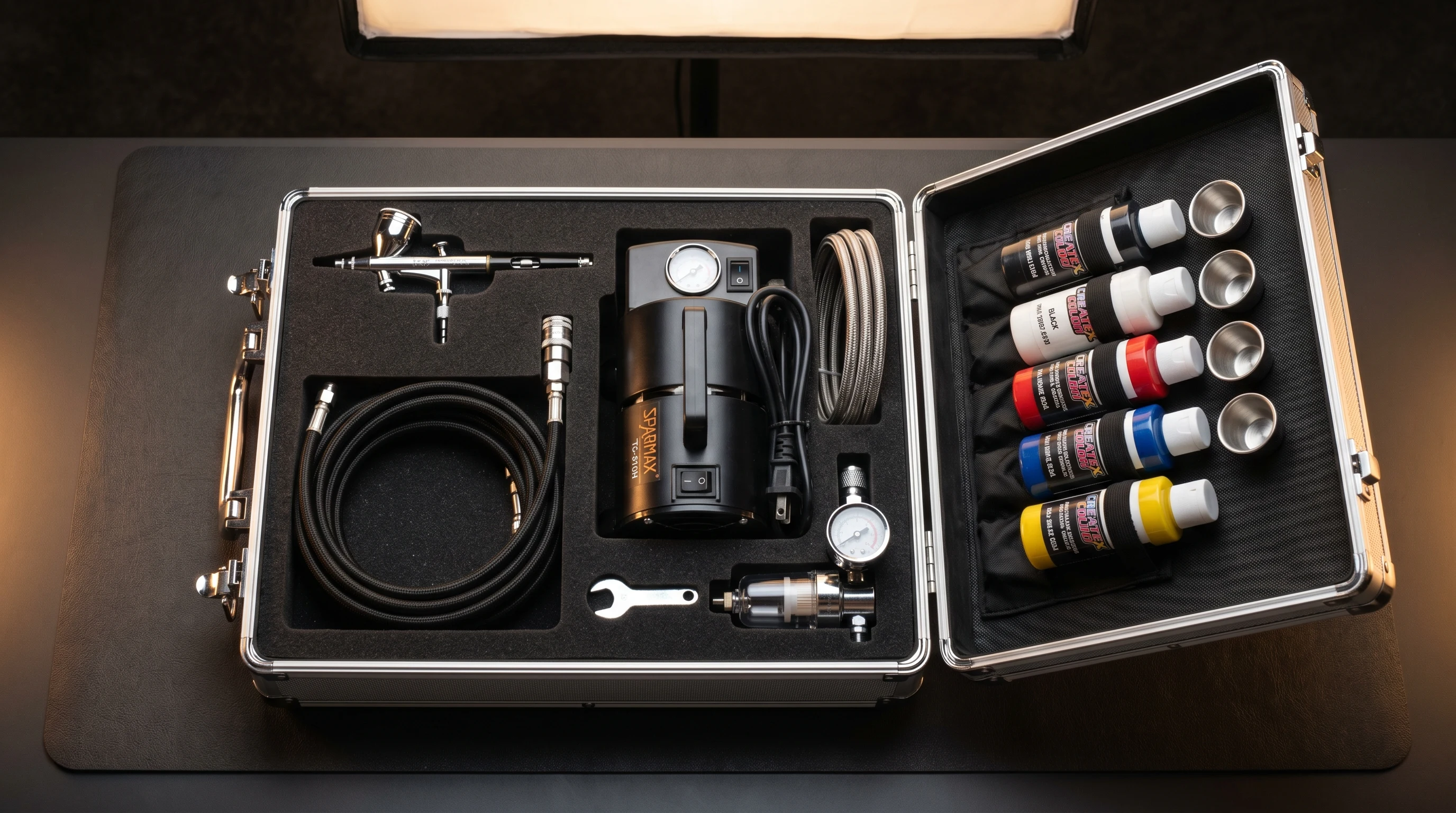
Buying an airbrush kit should be the easiest way to get started, everything in one box, ready to go. And sometimes it is. But the airbrush kit market is also full of cheap bundles that look impressive in photos and fall apart within weeks.
I’ve been airbrushing for over 15 years, and in that time I’ve seen the kit landscape change dramatically. The good news: there are genuinely excellent starter kits available today at every price point. The bad news: there are ten mediocre kits for every good one, and they all have suspiciously similar five-star reviews.
This guide cuts through the noise. I’ll show you which kits are actually worth buying, explain the three different approaches to building your first setup, and help you avoid the most common mistakes beginners make when choosing their first kit.
Buying the brush on its own instead of a boxed kit? The best airbrush guide compares them individually.
Three Ways to Start: Kit vs Build-Your-Own vs Hybrid
Before looking at specific products, understand that there are three approaches to your first airbrush setup. Each has trade-offs.
Approach 1: All-in-One Kit ($50–200)
What it is: A single box containing airbrush, compressor, hose, and sometimes paint and cleaning supplies.
Pros: Convenient, everything is compatible, lowest barrier to entry, good for testing whether you enjoy airbrushing before investing more.
Cons: You’re locked into whatever quality the kit manufacturer decided to include. Often the compressor is decent but the airbrush is mediocre, or vice versa. Upgrading means replacing individual components anyway.
Best for: Complete beginners who want to try airbrushing with minimal research and investment.
Approach 2: Build Your Own ($150–400)
What it is: Buy the airbrush and compressor separately, choosing the best of each within your budget.
Pros: You get exactly the quality level you want for each component. No compromise. Your setup grows with your skills, a good airbrush lasts decades.
Cons: Requires more research. You need to verify hose compatibility, fitting sizes, and ensure everything works together. Higher upfront cost.
Best for: People who’ve done their research and know they’re committed to the hobby. Also the right choice if you already own a compressor.
Approach 3: Hybrid: Cheap Kit + Quality Airbrush ($120–250)
What it is: Buy a budget all-in-one kit for the compressor and accessories, then separately buy a quality brand-name airbrush.
Pros: This is actually what many experienced airbrush artists recommend for beginners. The cheap compressors in budget kits are often surprisingly adequate (a compressor just needs to deliver consistent air, it’s not a precision instrument). But cheap airbrushes are where quality drops off a cliff. So you get a functional compressor for $50–80 and pair it with a proper $70–150 airbrush.
Cons: You end up with the kit’s cheap airbrush sitting unused (or keep it as a beater for rough work and priming).
Best for: Budget-conscious beginners who still want quality results from day one.
Quick Comparison Table
| Kit / Setup | What’s Included | Price tier | Best For | My Rating |
|---|---|---|---|---|
| Master Airbrush Cool Runner II | 3 airbrushes + compressor + paints | Mid-range | Absolute beginners, testing the hobby | ★★★☆☆ |
| Iwata Neo + Ninja Jet Kit | Iwata Neo CN + Ninja Jet compressor + hose + cleaning pot | Premium | Beginners wanting brand quality | ★★★★☆ |
| H&S Ultra 2024 + Sparmax Kit | Ultra 2024 airbrush + compressor + hose | Premium | Miniature painters, serious hobbyists | ★★★★★ |
| Paasche Talon Starter Set (also at SprayGunner) | Talon TG + compressor + hose | Mid-range | Versatile all-purpose use | ★★★★☆ |
| Cordless Starter Kit | Battery airbrush + built-in compressor | $40–70 | Portability, casual use, touch-ups | ★★★☆☆ |
| Hybrid: Budget kit + Badger Patriot | Generic compressor + Badger 105 | Mid-range | Smart budget approach | ★★★★☆ |
| Hybrid: Budget kit + Iwata Eclipse | Generic compressor + Eclipse HP-CS | Premium | Best value for serious starters | ★★★★★ |
Budget All-in-One Kits (Under $120)
Master Airbrush Cool Runner II Kit: MOST POPULAR STARTER
Includes: 3 airbrushes (2 gravity feed, 1 siphon feed), dual-fan compressor with tank, 6 acrylic paint colors, air hose, holder, cleaning brushes, instruction guide
This is the best-selling airbrush kit on Amazon, and there’s a reason, it offers an enormous amount of stuff for the price. Three airbrushes, a compressor with a storage tank (important for consistent pressure), paints, and accessories. For someone who just wants to open a box and start spraying, it removes every barrier.
The reality check: The airbrushes are functional but basic. Trigger feel is stiff, spray patterns are inconsistent at fine settings, and the nozzles clog more easily than brand-name brushes. The compressor, however, is surprisingly decent, quiet, reliable, and the dual-fan cooling lets it run continuously without overheating. The included paints are… paints. They work. They’re not great.
Honest recommendation: Buy this kit for the compressor and accessories. Use the included airbrushes to learn basic trigger control and cleaning technique. When you’re ready (usually within a few weeks), upgrade to a proper airbrush and keep using the compressor, it’ll serve you for years.
Who it’s for: Complete beginners testing the waters. People who aren’t sure if they’ll stick with airbrushing and don’t want to invest heavily upfront.
Generic Cordless Airbrush Kits: FOR CASUAL USE AND PORTABILITY
Includes: Battery-powered compressor + airbrush in one handheld unit, charging cable, sometimes spare cups and needles
The cordless airbrush category has exploded. These compact, battery-powered units are incredibly convenient, no hose, no separate compressor, no power cord. Pull them out of a drawer, paint for 30 minutes, put them back.
For serious airbrushing, they have limits. Battery life caps at 30–60 minutes, maximum PSI is typically 25–30 (limiting for thick paints), and the airbrush quality is basic. But for priming individual models, quick touch-ups, small craft projects, or painting at a gaming store where a full setup isn’t practical, they’re genuinely useful.
Recommendation: Don’t buy this as your only airbrush setup. But as a supplement to a proper setup, or as a zero-commitment way to try airbrushing before investing, they’re worth the low price. Look for models with adjustable PSI (not just on/off), rechargeable lithium batteries, and a 0.3mm gravity-feed airbrush.
Brand-Name Kits ($150–250)
These kits pair a genuine brand-name airbrush with a matched compressor. The price is higher, but so is the quality of every component.
Iwata Neo + Ninja Jet Kit: BEST BRAND-NAME STARTER
Includes: Iwata Neo CN gravity feed airbrush (0.35mm), Iwata Ninja Jet compressor, air hose, cleaning pot
The Iwata Neo CN is a proper dual-action airbrush, smooth trigger, consistent spray, and built to Iwata’s quality standards. The Ninja Jet compressor is small, quiet, and reliable. Everything is compatible out of the box.
Why this kit over cheaper options: The Neo CN alone outperforms every airbrush included in budget kits. The spray pattern is finer and more consistent, the trigger action is smoother, and it handles paint thinning variations more gracefully. You’ll spend less time fighting the tool and more time learning technique.
Limitation: The Ninja Jet compressor doesn’t have a storage tank, which means it runs continuously and may produce slight pressure fluctuations. For most hobbyists this is imperceptible, but for automotive or large-area work, a compressor with a tank is preferable.
Who it’s for: Beginners who want a quality setup from day one and are willing to pay more upfront to avoid replacing cheap components later.
Harder & Steenbeck Ultra 2024 Kit: BEST FOR MINIATURES AND DETAIL
Includes: H&S Ultra 2024 airbrush (0.2mm), compressor, hose
The Ultra 2024 is the best first airbrush for miniature painters (covered in detail in my miniatures guide). Its five-stage flow limiter prevents the most common beginner mistakes, and the 0.2mm needle handles fine detail beautifully. The drop-in nozzle system makes cleaning between colors incredibly fast.
Pairing it with a reliable compressor (Sparmax TC-501N or similar quiet compressor with tank) creates an exceptional starter setup for miniatures, scale models, Gunpla, and fine detail work.
Who it’s for: Miniature painters, model builders, anyone whose primary work involves small, detailed subjects.
Paasche Talon Starter Set: BEST VERSATILITY
Includes: Paasche Talon TG-3F airbrush (0.25mm, 0.38mm, and 0.66mm heads), compressor, braided hose, holder
The Paasche Talon is one of the most versatile airbrushes available. It ships with three spray head sizes, meaning you can do fine detail work (0.25mm), general work (0.38mm), and broad coverage (0.66mm) with a single airbrush by swapping heads. This is exceptional versatility for a starter kit.
Paasche is an American company that’s been making airbrushes since 1904. The Talon is their modern flagship, chrome-finished, comfortable to hold, and built to last.
Quirk: Paasche uses a proprietary hose fitting that doesn’t match the 1/8” BSP standard used by most other brands. The included hose solves this, but if you ever want to use a different hose or quick-disconnect, you’ll need a Paasche adapter. Minor inconvenience, but worth knowing.
Who it’s for: Beginners who want one airbrush that covers everything from fine lines to large area coverage. Great for people who aren’t yet sure which type of airbrush work they’ll focus on.
The Hybrid Approach: My Top Recommendation
For most beginners, I actually recommend the hybrid approach: buy a budget kit for the compressor and accessories, then add a quality airbrush separately.
Budget Kit + Badger Patriot 105
Buy any generic compressor kit and add a Badger Patriot 105 (in stock at SprayGunner). The Patriot is forgiving, durable, easy to clean, and sprays reliably with minimal fuss. Its 0.5mm needle is more forgiving of imperfect paint thinning (a huge advantage while you’re learning). You sacrifice fine detail compared to a 0.2–0.3mm needle, but you gain a frustration-free learning experience.
Best for: General hobby, crafts, T-shirts, larger subjects. Learning airbrush basics without fighting the tool.
Budget Kit + Iwata Eclipse HP-CS
Same approach but with the Iwata Eclipse HP-CS (also at SprayGunner), the single most popular airbrush in the world for good reason. The 0.35mm needle balances detail and coverage beautifully. The Eclipse is smooth, precise, and built to last decades.
Best for: Beginners who want a single airbrush that excels at everything from models to illustration to automotive touch-ups. The one-tool solution.
What to Avoid
Multi-airbrush budget kits where nothing is good. Some kits include 3–5 airbrushes at a $60 price point. Think about that math, each airbrush costs $10–15. At that price, you get rough machining, stiff triggers, inconsistent nozzles, and rubber seals that deteriorate within months. One quality airbrush beats five cheap ones every time.
Kits with no-name compressors and no tank. Tankless compressors pulse air rather than delivering a smooth, consistent stream. This creates a pulsing spray pattern that’s visible in your work. A compressor with even a small air tank smooths this out completely. Budget kits with tanks exist, choose those over tankless alternatives.
Siphon-feed airbrushes for fine work. Some kits include siphon-feed airbrushes (paint bottle underneath). These require higher air pressure and produce broader spray patterns, fine for T-shirts and large surfaces, but poor for detail work, miniatures, or precision painting. For beginners, gravity feed (cup on top) is almost always the right choice.
“Complete” kits with low-quality included paints. The 6–12 colors of acrylic paint included in many kits are typically watery, poorly pigmented, and inconsistent. They’ll work for practice, but don’t judge your results against them. Investing in proper airbrush paints (Createx (also at SprayGunner), Vallejo (also at SprayGunner), Golden) makes a dramatic difference.
What Else You’ll Need (Not Usually Included)
Even “complete” kits rarely include everything you need for your first session:
Always missing:
- Respirator mask. Non-negotiable for health. Budget kits never include one. ($20–35)
- Proper cleaning solution. Kits might include a tiny bottle. Buy a full-size bottle of Createx 4008 or Iwata Medea Cleaner (also at SprayGunner).
- Proper airbrush paint. Unless the kit specifically includes quality paint, plan to buy separately. ($15–40 for a starter set)
Usually missing:
- Moisture trap (if not built into compressor)
- Quick-disconnect coupling
- Masking tape
See my complete accessories guide for the full checklist with priorities.
Choosing by Project Type
Different projects favor different kits:
| Your Main Interest | Recommended Kit/Setup | Why |
|---|---|---|
| Miniatures / Warhammer | H&S Ultra 2024 + compressor | 0.2mm needle, flow limiter, drop-in nozzle for fast color changes |
| Scale models / Gunpla | Iwata Neo kit or H&S Ultra | Fine detail + occasional broad coverage |
| T-shirts / fabric | Budget kit + Badger Patriot | 0.5mm needle handles textile paints well, durable |
| Custom automotive | Hybrid: quality compressor + Iwata Eclipse | 0.35mm all-rounder, handles both detail and coverage |
| Illustration / fine art | Build-your-own: quality compressor + H&S Evolution 2-in-1 | Dual needle sizes for maximum flexibility |
| Cake decorating | Budget all-in-one kit | Low-pressure food color work, doesn’t need precision |
| Nail art / makeup | Cordless kit | Portability, quick sessions, low paint volume |
| Not sure yet / trying it out | Master Airbrush Cool Runner II | Cheapest way to try everything, upgrade later |
Frequently Asked Questions
What should I look for in an airbrush kit?
The three essentials: a dual-action gravity-feed airbrush with a 0.2–0.5mm needle, a compressor with a storage tank (for consistent pressure), and a braided air hose. Beyond that, a cleaning pot, cleaning brushes, and at least basic instructions are helpful. Don’t be seduced by kits with many airbrushes, one quality airbrush beats several cheap ones.
How much should I spend on my first airbrush kit?
For a basic functional kit, $80–120 gets you started. For a quality setup with a brand-name airbrush, budget $150–250. The sweet spot for most beginners is the $150–200 range, either as a brand-name kit or a hybrid approach (budget compressor + quality airbrush). Spending under $50 usually results in frustration. Spending over $300 isn’t necessary for a beginner.
Is it better to buy a kit or build my own setup?
Both work. Kits are more convenient and guarantee compatibility. Building your own lets you choose the best quality for each component. The hybrid approach (cheap kit for the compressor + separate quality airbrush) gives you the best of both worlds at a reasonable price. I recommend this for most beginners.
Are cheap airbrush kits from Amazon worth buying?
The compressors in budget kits ($60–120 range) are often surprisingly adequate, they deliver consistent air and last for years. The airbrushes, however, are typically mediocre at best: rough triggers, inconsistent spray, fragile nozzles. A budget kit is worth buying if you plan to upgrade the airbrush within a few weeks, you’ll keep and use the compressor long-term.
Do I need a compressor with a tank?
Strongly recommended. A compressor without a tank delivers pulsing air, which creates visible pulsing in your spray pattern. A tank stores compressed air and delivers it smoothly. Even a small tank makes a noticeable difference in spray quality. Most decent kits ($80+) include a compressor with at least a small tank.
What needle size is best for a beginner kit?
A 0.3–0.5mm needle is the most forgiving for beginners. Smaller needles (0.15–0.2mm) produce finer lines but clog more easily and demand perfectly thinned paint. Larger needles (0.5mm+) are forgiving but too broad for detail work. For a single all-purpose airbrush, 0.35mm is the sweet spot.
Can I use any paint with an airbrush kit?
Technically yes, but most paints need thinning to the consistency of milk before they’ll spray properly. Water-based acrylics (Createx, Vallejo, Golden Airbrush Colors) are easiest for beginners, they thin with water, clean up easily, and are low-odor. Avoid thick craft-store acrylics until you’ve mastered paint thinning, they clog airbrushes relentlessly.
My Bottom Line
If I were starting from zero today, here’s exactly what I’d buy:
On a tight budget: Master Airbrush Cool Runner II kit. Use it for a month to learn basics. Then buy a Badger Patriot 105 or Iwata Neo CN (also at SprayGunner) and keep using the kit’s compressor.
Willing to invest: Skip the cheap kit entirely. Buy an Iwata Eclipse HP-CS and a quality compressor with tank. This setup will last you years, possibly decades, without needing replacement.
Focused on miniatures: H&S Ultra 2024 + a quiet compressor with tank. The flow limiter alone is worth the price for a beginner.
Whichever path you choose, the most important thing is to start. A $80 budget kit will teach you more in one afternoon than a month of reading about which airbrush to buy. You can always upgrade later, and by then, you’ll know exactly what you need.
- Best Airbrush for Beginners 2026. Detailed airbrush-only recommendations
- Best Airbrush Compressor 2026. Compressor buying guide
- Essential Airbrush Accessories & Tools. Everything else you need
- How to Choose the Right Airbrush Paint. Paint by project type
- How to Clean an Airbrush. Essential from day one
- Best Airbrush for Miniatures. Miniature-specific recommendations